Zadar, Croatia | An Afternoon Through the Old Town
Zadar is a Croatian city that may not be as well known to visitors as some of the other heavyweights along the coast. However, it is one city that should feature in a Croatian itinerary. What makes it appealing is that it can be explored over the course of an afternoon. The Old Town is compact and easy to navigate, whilst the waterfront is close by, with several of the city’s most recognisable landmarks within easy walking distance of each other.
This Edit follows an exploratory afternoon itinerary beginning at the Sea Organ, before continuing to the Roman Forum, St Donatus Church, St Anastasia’s Cathedral, Široka ulica, Queen Jelena Madijevka Park and the city walls, before ending at The Garden Lounge for a drink and light food.
This afternoon is intended to provide an opportunity to explore what matters without the need for a multi-day stay. There is no pressure to do everything, but there is enough included to understand the history of the city and what it has to offer today.
Who this Edit is for
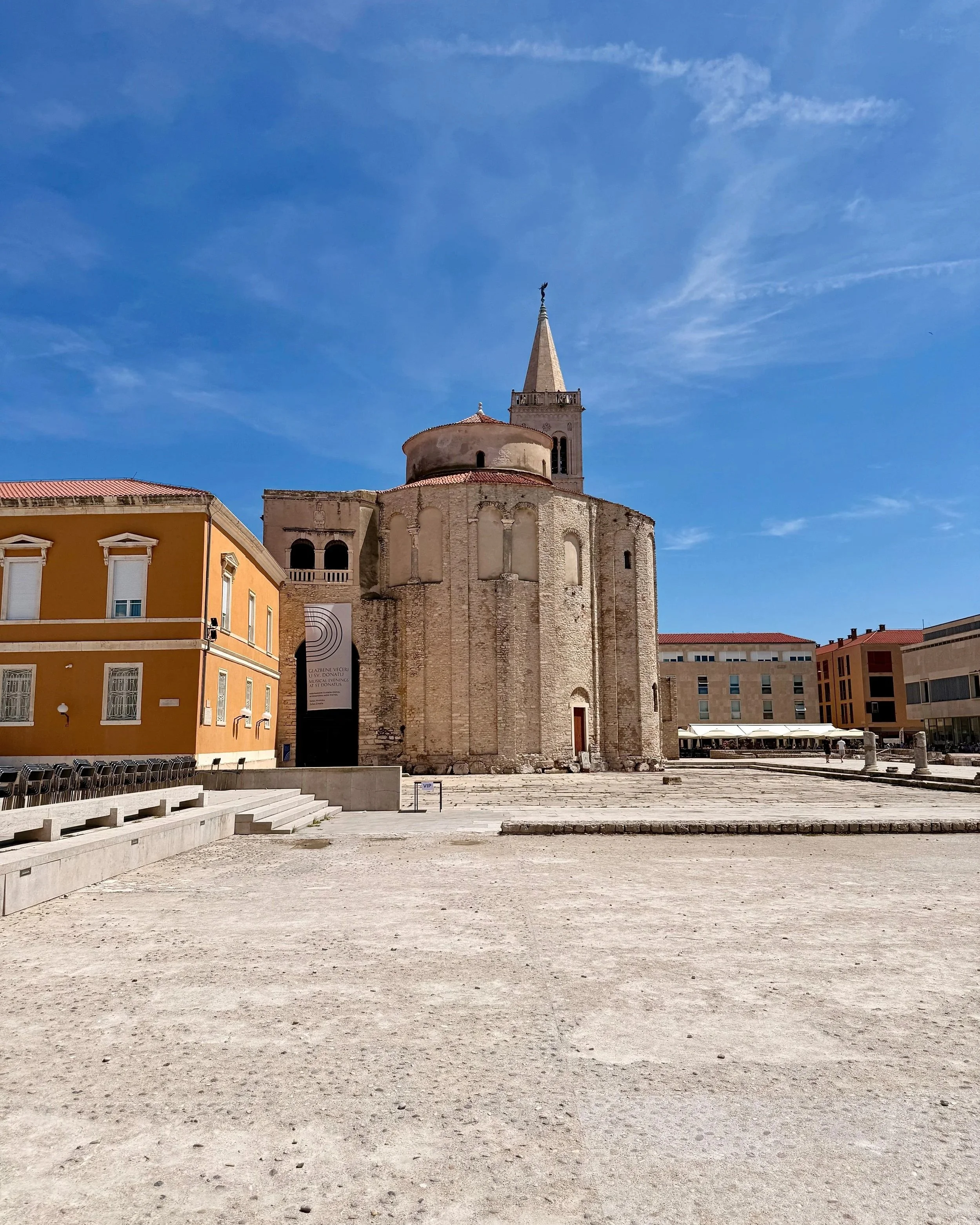
Image: St Donatus Church & Roman Forum, Zadar. © 2026 Palates & Miles
This Edit is for those planning a visit to Zadar with limited time and wanting a clear route through the Old Town and waterfront. It works especially well for travellers arriving as part of a wider Croatia itinerary, those spending one night in the city or those who want to understand Zadar without committing to a full day of formal sightseeing.
The route includes one paid stop at St Anastasia’s Cathedral, with the remaining experience focused around walking, views, public spaces and a final drink or light meal. It is not intended to be a full city guide, but a route that explores enough of Zadar to show why it deserves more attention in a Croatian itinerary.
The standard
Every recommendation in this Edit is assessed against the same five points: service, design, food and drink, atmosphere and value. Value is not about cheap or expensive. It is whether the experience earns the time and price invested.
Start at the Sea Organ
The afternoon should begin at arguably the city’s most famous modern landmark, the Sea Organ. Designed by acclaimed Croatian architect Nikola Bašić and installed in 2005, it marks an intentional rejuvenation of the promenade. Built into the stone steps leading to the sea on the waterfront, the Sea Organ uses the movement of the waves to create sound through chambers below the surface. This is extremely unique and means that the experience is dependent on the elements and even the passing of boats and ferries.
This is not a landmark that requires much explanation or context to understand what it is about, making it a perfect starting point. The intention here is to dwell, listen and allow the waterfront to set the tone for the rest of the afternoon. Its location conveniently places you at the edge of the Old Town, with the Adriatic in front and the historic centre behind.
If visiting later in the day, the nearby Sun Salutation, also created by Bašić, should be enjoyed as part of the same waterfront setting. The two are located next to each other and can therefore be enjoyed together. Whilst it offers a slower beginning, it also starts the afternoon with a clear understanding of what Zadar is today.
P&M note: The Sea Organ can be busy, particularly around sunset, therefore starting here in the early afternoon is most practical for a more comfortable experience.
Continue to the Roman Forum and St Donatus Church
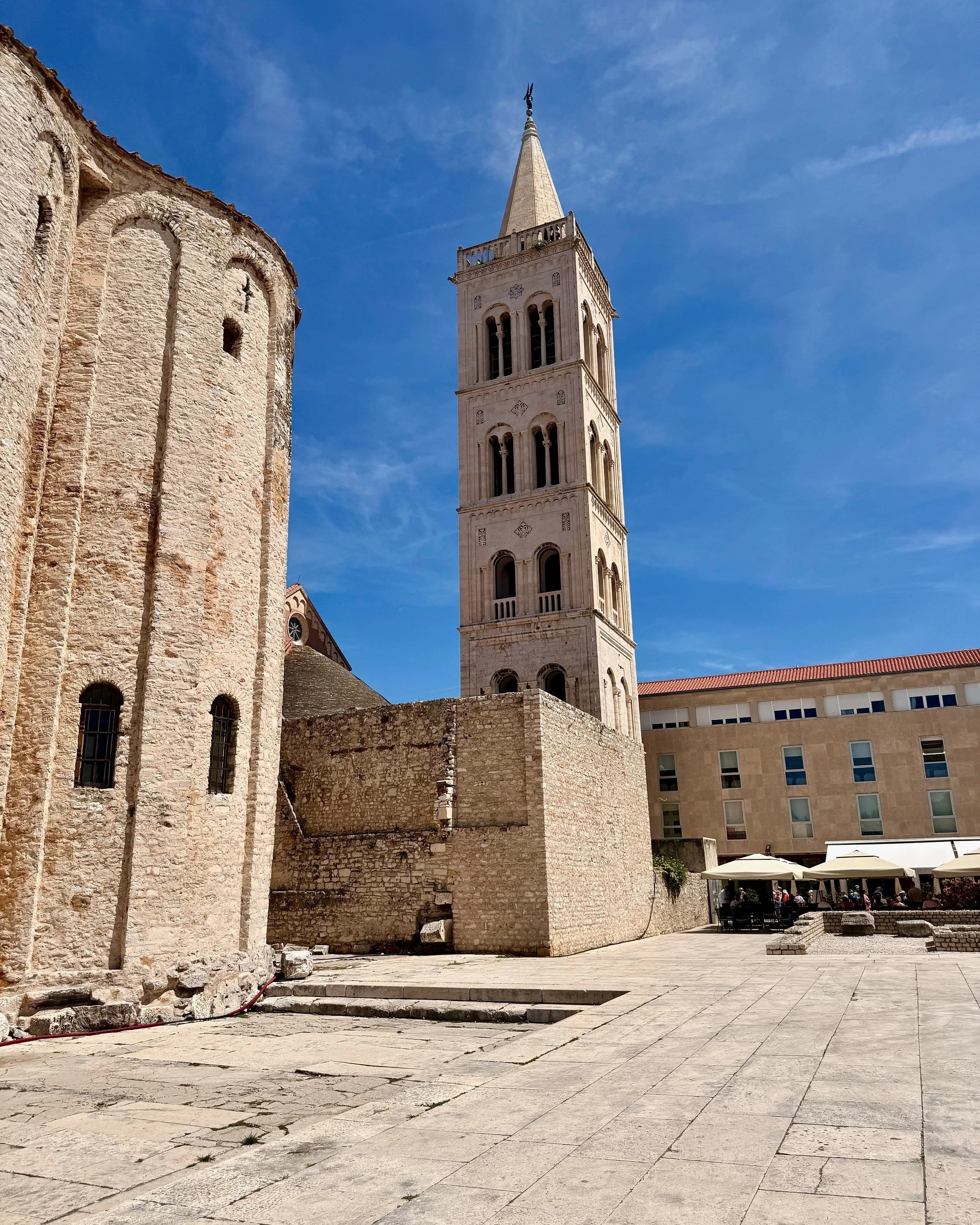
Image: St Donatus Church & St Anastasia’s Cathedral Bell Tower, Zadar. © 2026 Palates & Miles
From the Sea Organ, continue towards the Roman Forum by walking along the promenade. This is where the historic centre of Zadar is most apparent. The remains of the Forum sit openly within the space and create one of the clearest links between modern Zadar and its Roman past.
The Roman Forum was built between the first century BC and the third century AD and remains one of the most important historic spaces in the city. It does not need to be approached as a museum visit, although there is one nearby should this be of interest. Its value is in how it remains part of the city today, with people moving through and using the space as part of daily life.
St Donatus Church, located next to the Forum, should also be admired from this spot. Dating from the 9th century, it is one of Zadar’s defining landmarks and stands out because of its rounded form and position beside the Forum.
Visit St Anastasia’s Cathedral
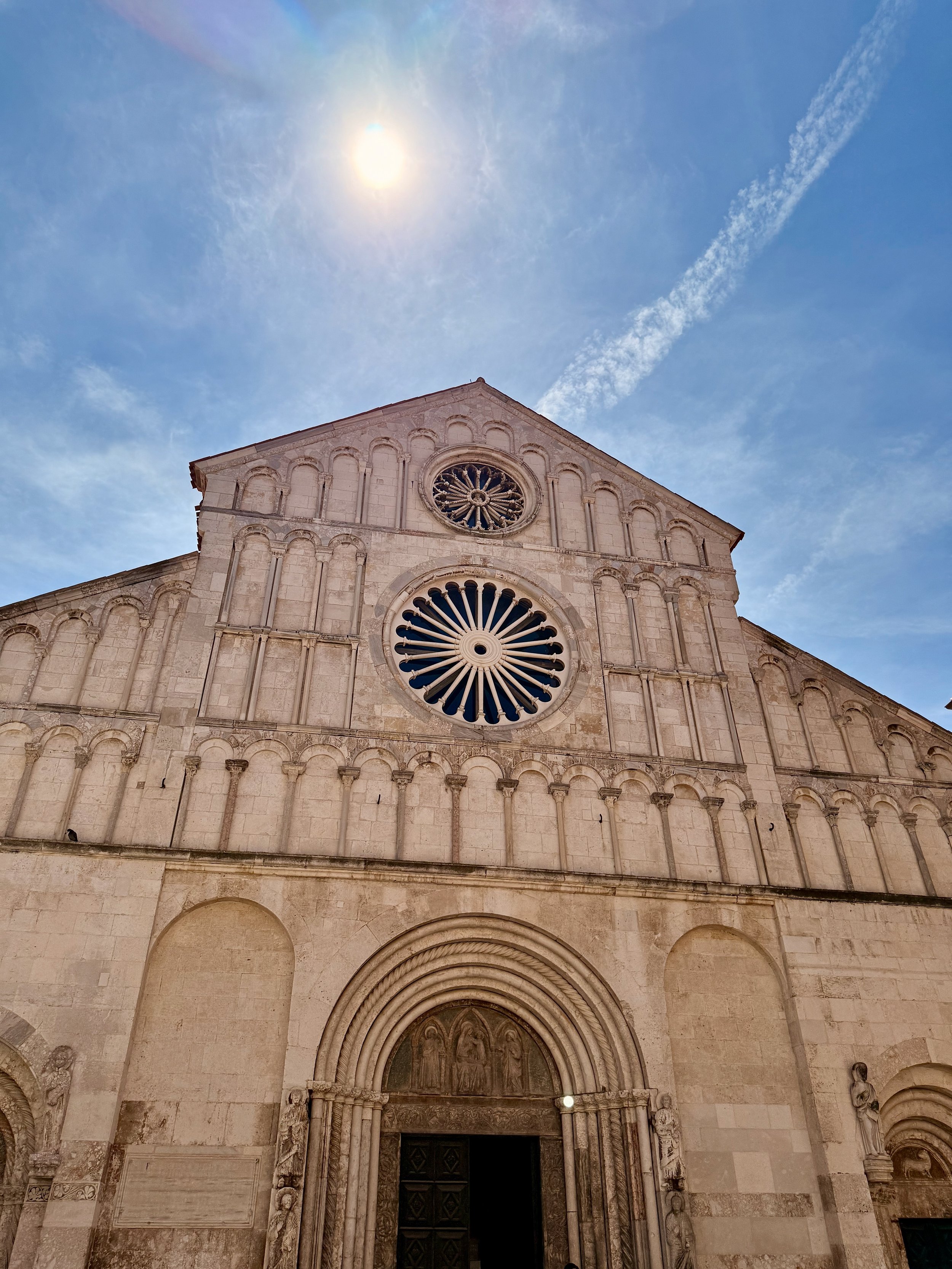
Image: St Anastasia’s Cathedral Exterior, Zadar. © 2026 Palates & Miles
From the Roman Forum, continue into St Anastasia’s Cathedral. This is the one planned paid stop in the afternoon and should be treated as the one interior visit of the itinerary. The cathedral is one of the most important religious buildings in Zadar and its current Romanesque structure was built in the 12th and 13th centuries on the site of earlier buildings.
The interior of the cathedral is detailed, however it is not as ornate as many other cathedrals in Europe tend to be. This affords it a unique character and significance within the history and life of the city. It is not necessary to spend an excessive amount of time here, but it is worth allowing enough time to explore the cathedral and its crypt beneath.
If the bell tower is open and you have the time, it can be visited separately. It is accessed from the street and requires an additional admission fee to that of the cathedral. However, for a shorter afternoon, the cathedral itself is enough to act as a break from the summer heat and to understand one of the key interiors of the city.
P&M note: Check the current entry arrangements before visiting, as access, ticketing and opening hours can change. Cash payment is required here, so consider this before visiting.
Continue along Široka ulica
After St Anastasia’s Cathedral, continue towards Široka ulica, also known as Kalelarga or the Wide Street. This is one of the most prominent streets through the Old Town and acts as its main shopping and commercial route. Here you will find shops and boutiques where you can browse and pick up any local produce or gifts you may wish to purchase.
There is no fixed agenda here other than to explore at your own pace and interest. During the busier part of the afternoon, it can be crowded, however there is still sufficient space for window shopping or stopping briefly along the way.
As you continue towards Queen Jelena Madijevka Park, pass by the Church of St Simon on Ulica don Ive Prodana. It’s one final architectural stop before entering the park and city walls. If open, it can be entered free of charge before moving onwards towards the park.
There are also cafés and places to stop should you wish to take a break before continuing with the rest of the afternoon.
Queen Jelena Madijevka Park
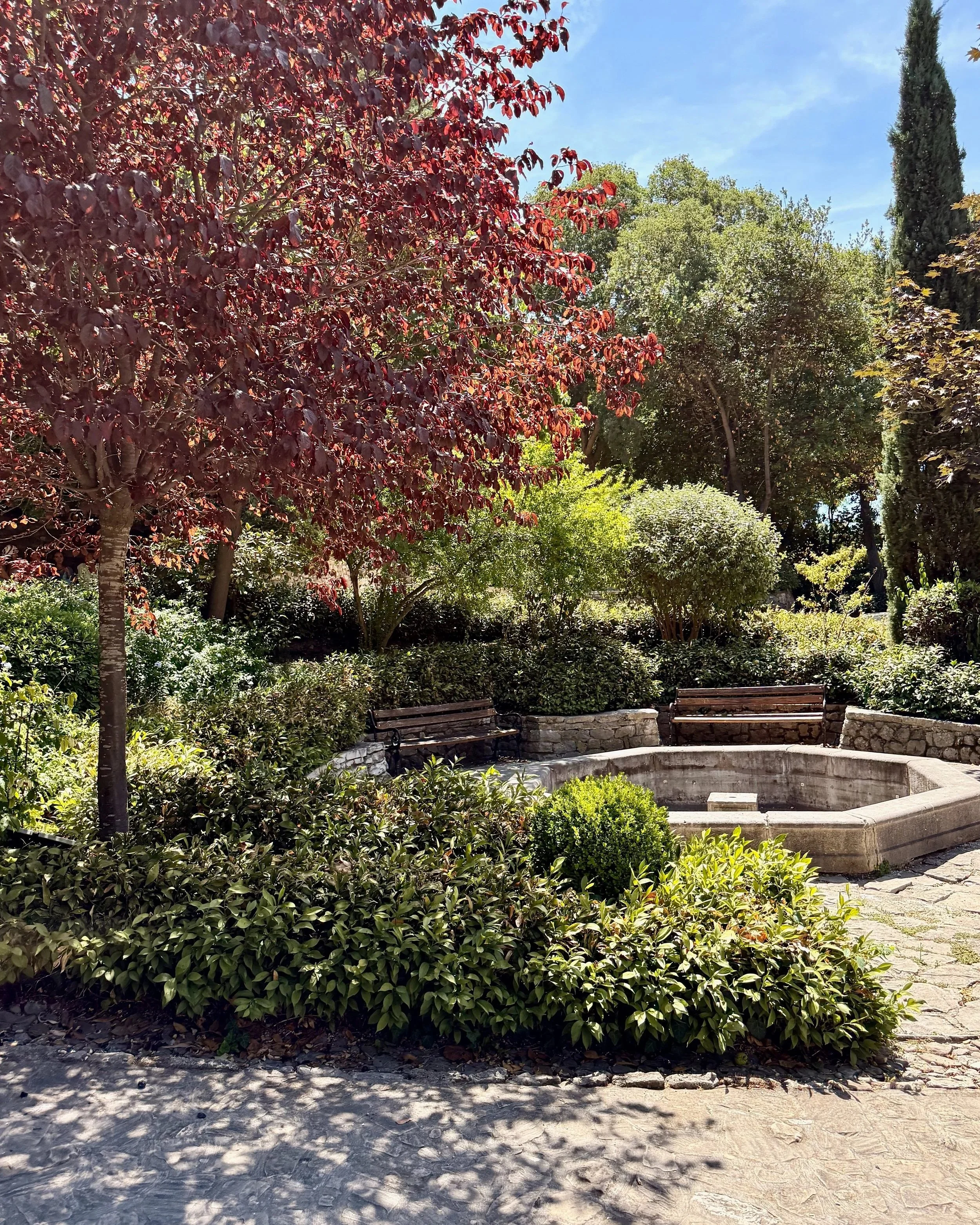
Image: Queen Jelena Madijevka Park, Zadar. © 2026 Palates & Miles
Queen Jelena Madijevka Park is located near Five Wells Square and provides an immediate change of setting after exploring the cobbled streets of the Old Town. It is one of Zadar’s most important green spaces and offers a place to pause away from the busiest parts of the historic centre. It also provides some welcome shade during the height of the summer heat.
Opened in 1829, the park is considered Zadar’s first public park and was laid out while the city was still fortified. It is named after Queen Jelena, also known as Helen of Zadar, a 10th-century Croatian queen and wife of King Mihajlo Krešimir II. This gives the park a stronger connection to Croatian history, rather than simply being a green space within the city.
Zadar’s defensive history also comes into focus here, as the park sits close to the bastions and city walls. This makes it a useful stop before continuing towards Bedemi zadarskih pobuna and the final part of the route.
Walk along the Bedemi zadarskih pobuna
After the park, continue along the Bedemi zadarskih pobuna, or the Walls of Zadar Uprisings. The city walls are one of the most important parts of Zadar’s historic identity and form part of the Venetian Works of Defence, which were inscribed on the UNESCO World Heritage List in 2017.
From here, you get a different perspective on the city. Rather than walking through the centre of the Old Town, you can see how Zadar was shaped as a fortified city. The views across the wider region and towards the Velebit mountain range are a reason to take the walk alone.
There are shaded sections and places to sit along the walls, which are useful after an afternoon of walking. This also helps during the peak parts of the afternoon, when the heat can make the walk feel more demanding.
P&M note: The walls and surrounding areas require comfortable shoes. The walk is straightforward, but the surfaces, steps and heat can still make the afternoon feel more demanding than it looks on a map.
Finish at The Garden Lounge
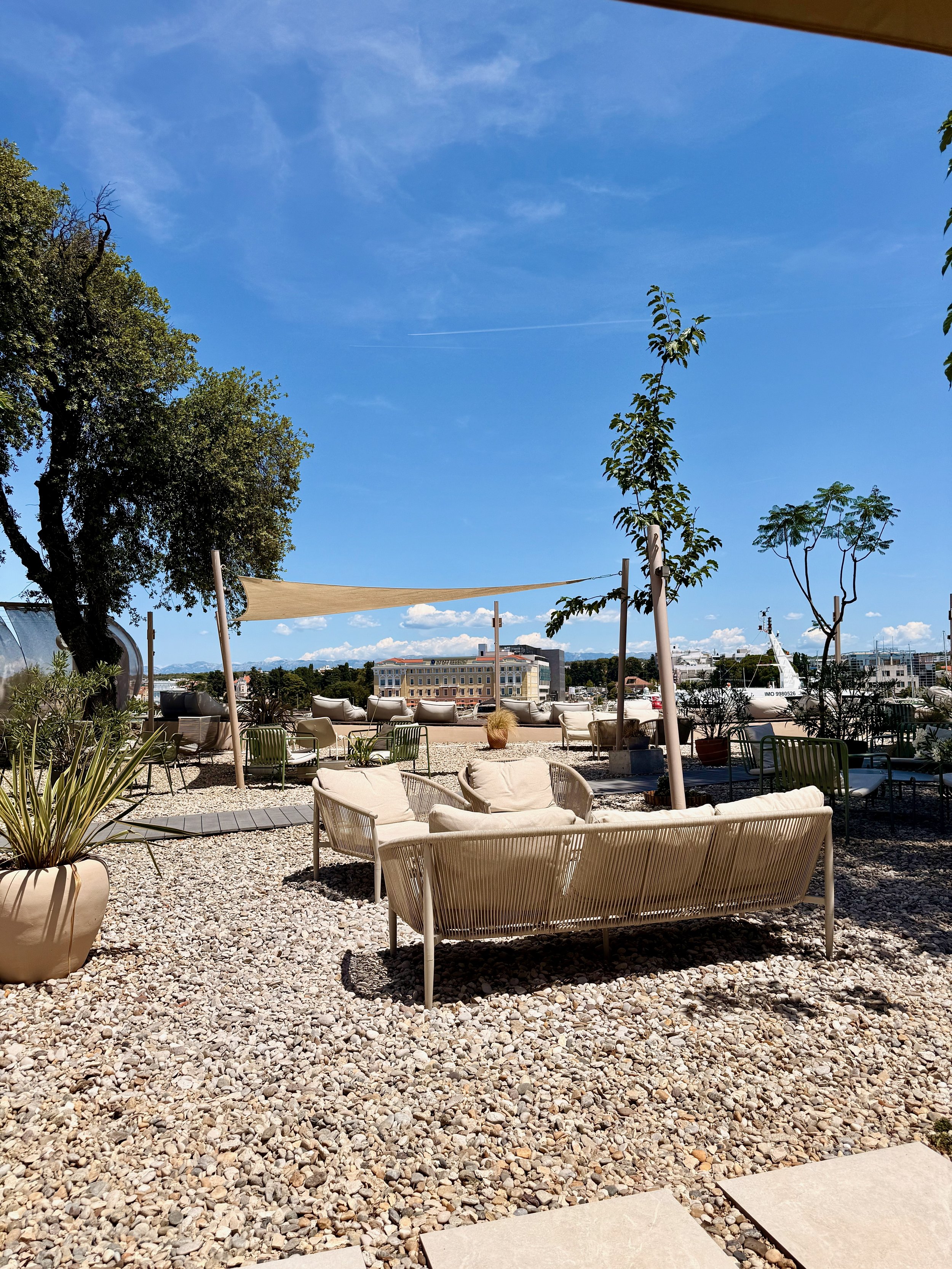
Image: The Garden Lounge, Zadar. © 2026 Palates & Miles
The afternoon should finish at The Garden Lounge, where drinks and light food are on offer with views across the wider city and region. The setting is informal, with daybeds and seating arranged throughout the space, making it a useful place to stop after walking through the Old Town, park and city walls.
The menu includes soft drinks, cocktails, wines and lighter food options, including Roman-style pinsas, salads, snacks and desserts. A full dining experience is not required after an afternoon exploring, so this style of menu works well. It also leaves room for later travel plans or dinner elsewhere, depending on the rest of the day.
The views are a key part of the experience. From here, you can spend time looking out across the city, the harbour and the movement of boats beyond the walls.
Service is friendly and laid back in the afternoon, although the atmosphere becomes busier later in the evening as The Garden Lounge moves more towards a nightlife setting.
How to approach the afternoon
This route works best across three to four hours, depending on the time spent at the Sea Organ, St Anastasia’s Cathedral and The Garden Lounge. It can be completed in less time, but one or two stops should be removed if your time is limited.
Start earlier in the afternoon if visiting during the summer heat, especially if you want to spend time at the Sea Organ and walk along the walls. Shade, water and breaks should be built into the route, particularly between the Forum, cathedral and park sections.
The route is mostly on foot and does not require transfers. Comfortable shoes are necessary, as the walk includes cobbled streets, open waterfront areas, steps and sections around the walls. Extra care should be taken near the waterfront steps, as they can be slippery and are exposed to waves.
If visiting during peak season, expect crowding around the waterfront, Forum and main streets. The cathedral is the only planned paid stop, so check opening times and entry arrangements before including it in the itinerary. If the cathedral is closed, the route still works by viewing the exterior and continuing towards Široka ulica and the park as planned.
P&M notes
• Skip the Sea Organ during this route if you want to experience it alongside the Sun Salutation separately at sunset. It is one of Zadar’s busiest points later in the day, so there is no point visiting twice if you plan to return.
• St Anastasia’s Cathedral is the main paid cultural stop in the route. Check current opening times and entry arrangements before visiting, and carry cash in case card payment is not available.
• Queen Jelena Madijevka Park is the best point to build in shade and a short rest, especially in summer. Use it before continuing towards the walls, as the heat and incline can make the final part of the walk more demanding.
• Comfortable shoes are necessary. The route includes cobbled streets, waterfront steps, exposed sections and parts of the city walls, so it can feel more tiring than the distance suggests.
Final thoughts
An afternoon in Zadar’s Old Town does not need to cover everything. This route works because it connects the waterfront, Roman history and the city as it is experienced today.
It can be walked at your own pace and requires no pre-booking. History is central to Zadar, but its appeal comes from how easily those historic sites sit alongside cafés, shops and everyday life in the Old Town.
For those visiting Zadar as part of a wider Croatia trip, this is a practical way to see the key parts of the Old Town in one afternoon. It also leaves enough unexplored to justify a longer stay or a second visit in the future.
To receive future Edits, releases and Notes from Palates & Miles, you can sign up here.