Grasse, Provence | The Art of Scent
Grasse is a city shaped by view, history and craft. Best known as the capital of perfume owing to its renowned perfumeries, it offers a distinctive experience within a relatively small footprint. Its historic streets, cafés and shops work together to create a visit that feels focused rather than crowded.
Located in the hills north of Cannes, Grasse offers a different perspective on the French Riviera. From here, the coast feels close but not consuming, allowing the city’s architecture, culture and perfume heritage to take the lead.
Whilst you can spend hours exploring the streets and observing the goings-on, it is within the walls of its ateliers that the most defining and worthwhile experience is found.
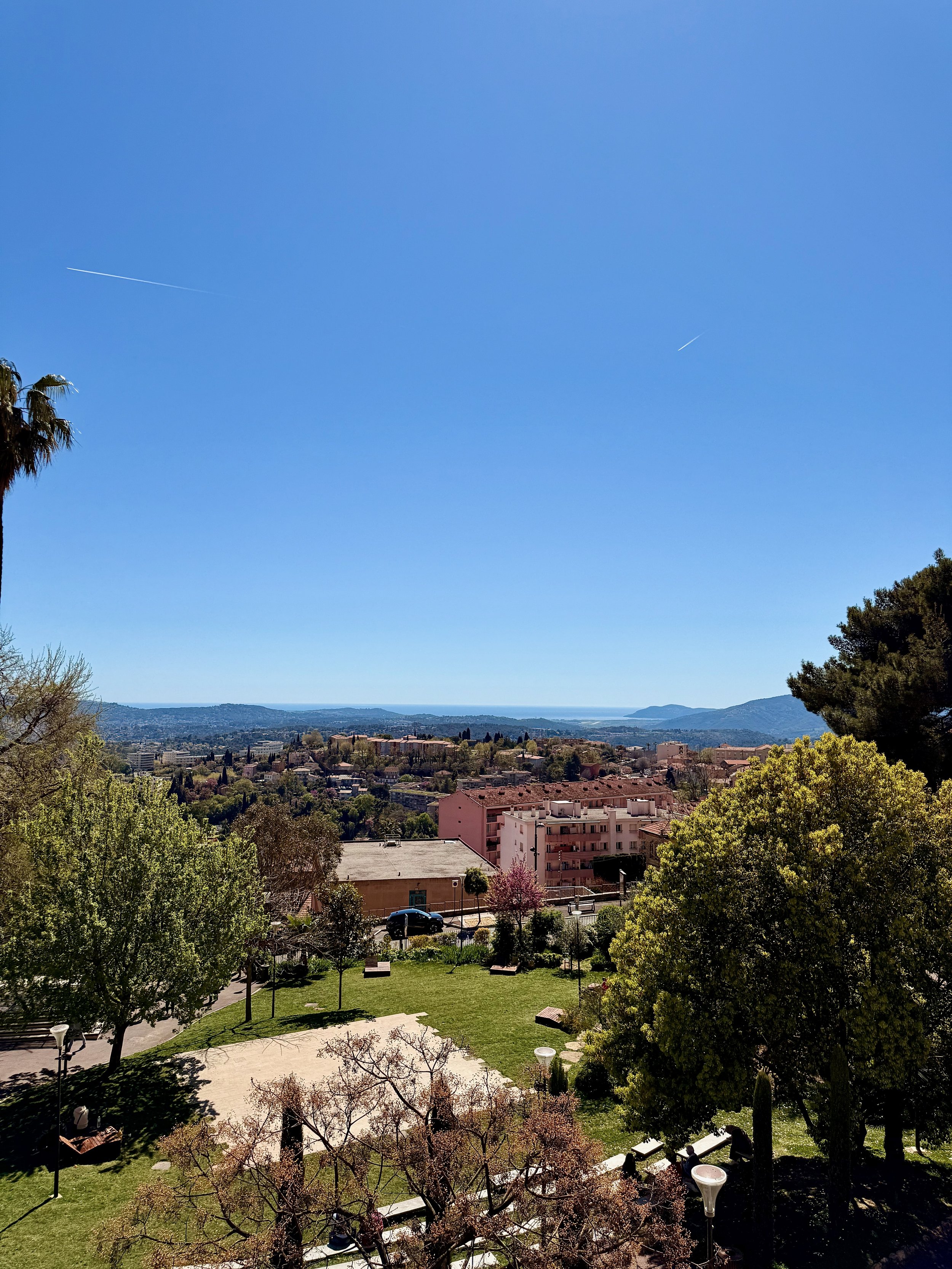
Image: View from Grasse overlooking the French Riviera. © 2026 Palates & Miles
Who this is for
This Edit is crafted for those who are interested in the Riviera beyond the shoreline. The experience of craft, culture and excellence found in Grasse can bring a different perspective worth exploring time and time again.
The standard
Every recommendation below earns its place on the same five points: service, design, food and drink, atmosphere and value. Value is not about cheap or expensive. It is whether the experience earns the price paid.
Arrival into Grasse
Grasse can be reached by train or by car. Train services run from Cannes, Nice and Marseille, arriving at Grasse station, located below the historic centre. From there, the walk into the old town is uphill and takes around 15 to 20 minutes depending on pace. It is manageable, but the incline should be considered, especially in warmer weather or if travelling with luggage, so a taxi from the station may be preferable.
Arriving by car gives more flexibility, particularly if visiting Grasse as part of a wider Riviera or Provence route. Parking in the historic centre itself is limited, so it is best to use one of the public car parks around the edge of town. Parking Notre-Dame des Fleurs and Parking La Roque are both practical options for accessing the old town without navigating the narrowest streets.
Understanding Grasse | The perfume capital
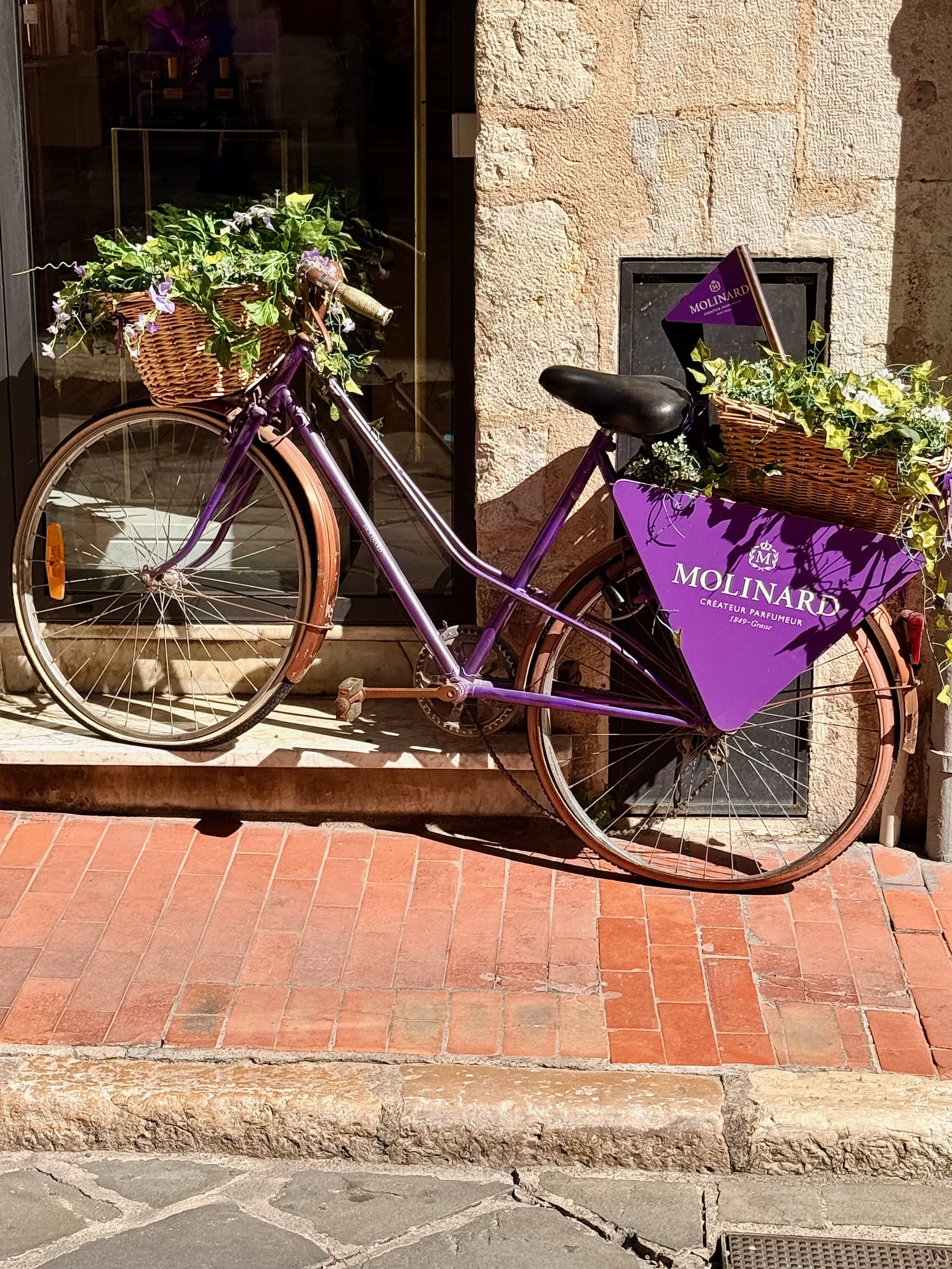
Image: Bicycle outside Molinard Grasse Centre. © 2026 Palates & Miles
Grasse’s reputation as the perfume capital of the world can be traced back to the 16th century. At the time, the town was known for the tanning of leather. However, the strong odours associated with this process led to the introduction of scented gloves. This quickly evolved into a craft, with local producers beginning to extract and blend fragrances using flowers grown in the surrounding countryside of Provence.
Over time, Grasse became the centre of perfume production in France. Its favourable climate allowed for the cultivation of jasmine, rose and orange blossom. These raw materials, combined with generations of expertise, established the town as a key supplier to some of the world’s most renowned fragrance houses. Today, while production methods have modernised, Grasse remains deeply connected to its heritage, with its ateliers and perfumeries continuing to define both the town and its global identity.
Exploring the old town
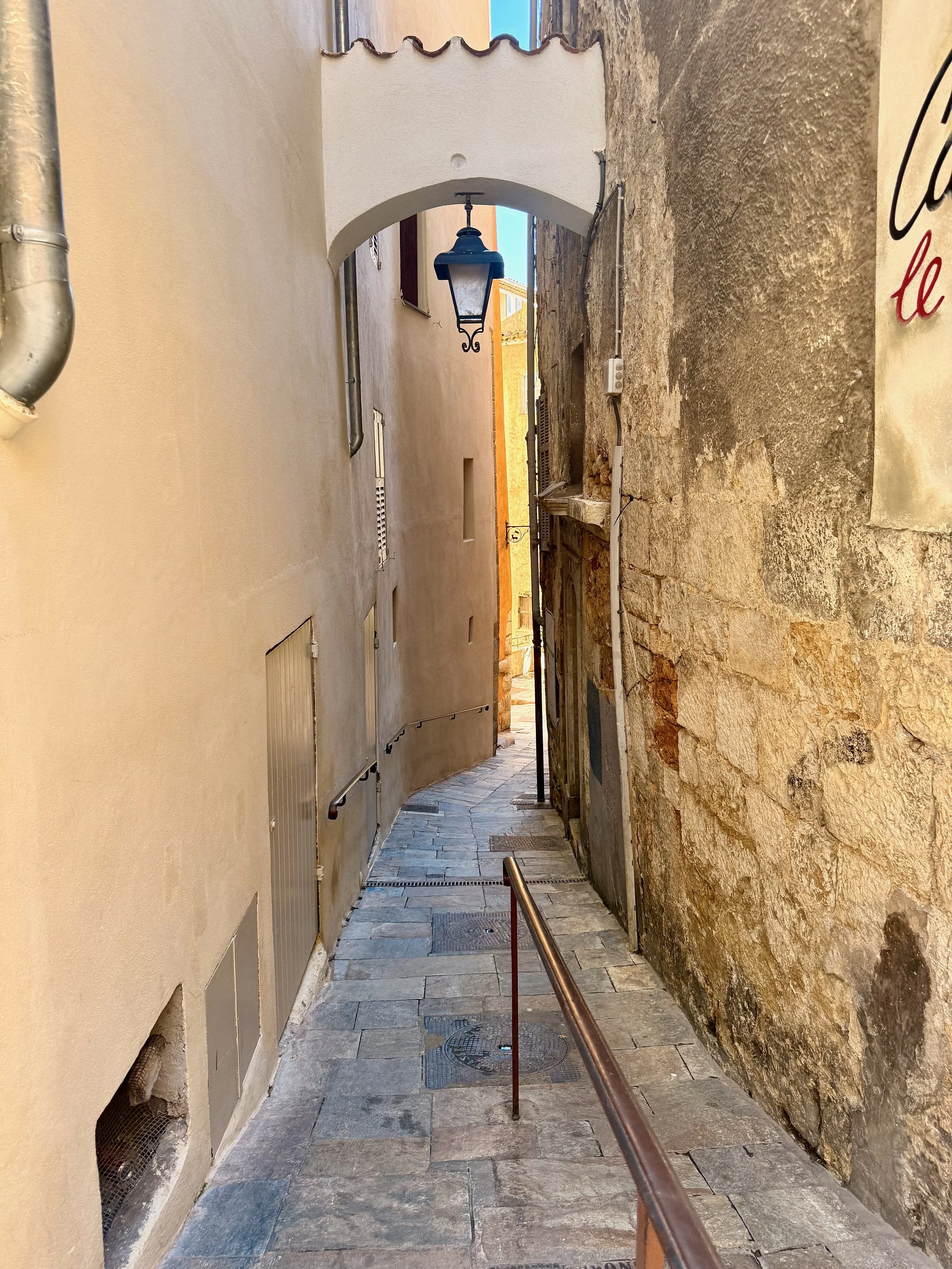
Image: Historic street in Grasse. © 2026 Palates & Miles.
The historic old town of Grasse is by far one of its finest and defining features. The architecture is entwined with the offering of shops, restaurants and cafés, squares and churches. It’s the quieter spots, away from the main streets and squares, which bring the character of the city to life.
Starting at Place du Cours Honoré-Cresp, with its spectacular views over the Riviera, you immediately begin to understand the scale of the city and wider region. It is also next to the Musée International de la Parfumerie (International Museum of Perfume), which provides not only a unique history of Grasse and its perfume production, but also how it has grown into the worldwide industry it is today.
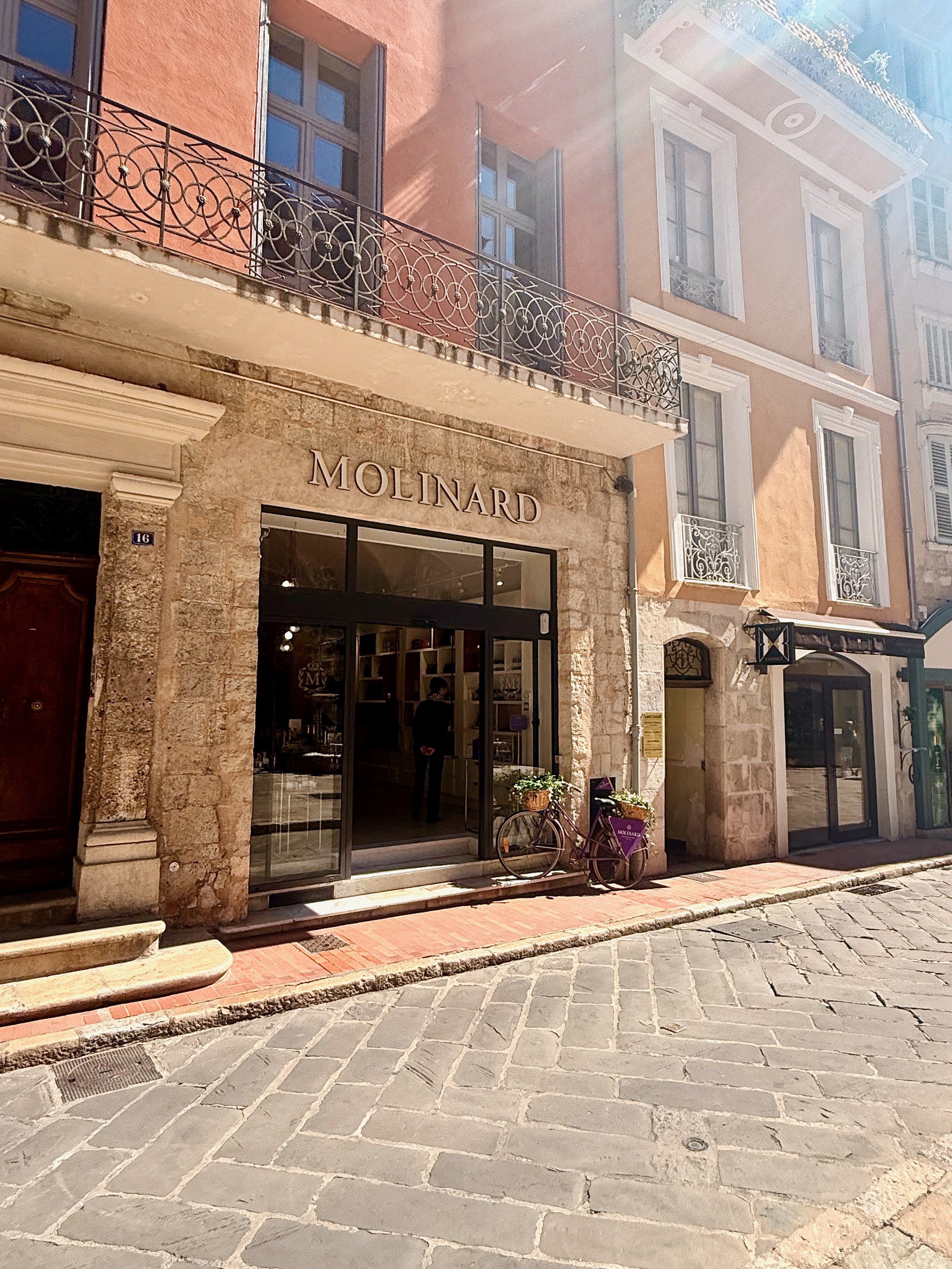
Image: Molinard Grasse Centre on Place aux Aires. © 2026 Palates & Miles
Following on from there, there are numerous streets and alleyways to be explored, with most housing boutiques, shops selling local produce and cafés. Some streets to note are Rue Jean Ossola for shopping at Fragonard, Rue Gazan for the splendid Cathédrale Notre-Dame-du-Puy, and Place du Grand Puy for the viewpoint overlooking the eastern part of the city and surrounding area. However, the most notable of all places is Place aux Aires, which acts as the epicentre of Grasse’s old town.
This vibrant square offers numerous cafés and other eateries which spill out onto the square, creating a communal atmosphere. The buildings are colourful and vibrant, adding to the appeal and aesthetic of the space. On market days, particularly Saturday mornings, the square is enhanced further with stalls selling the finest produce of Provence. It is also home to many of Grasse’s perfume houses and ateliers, further enhancing its history and significance.
The experience | Molinard atelier
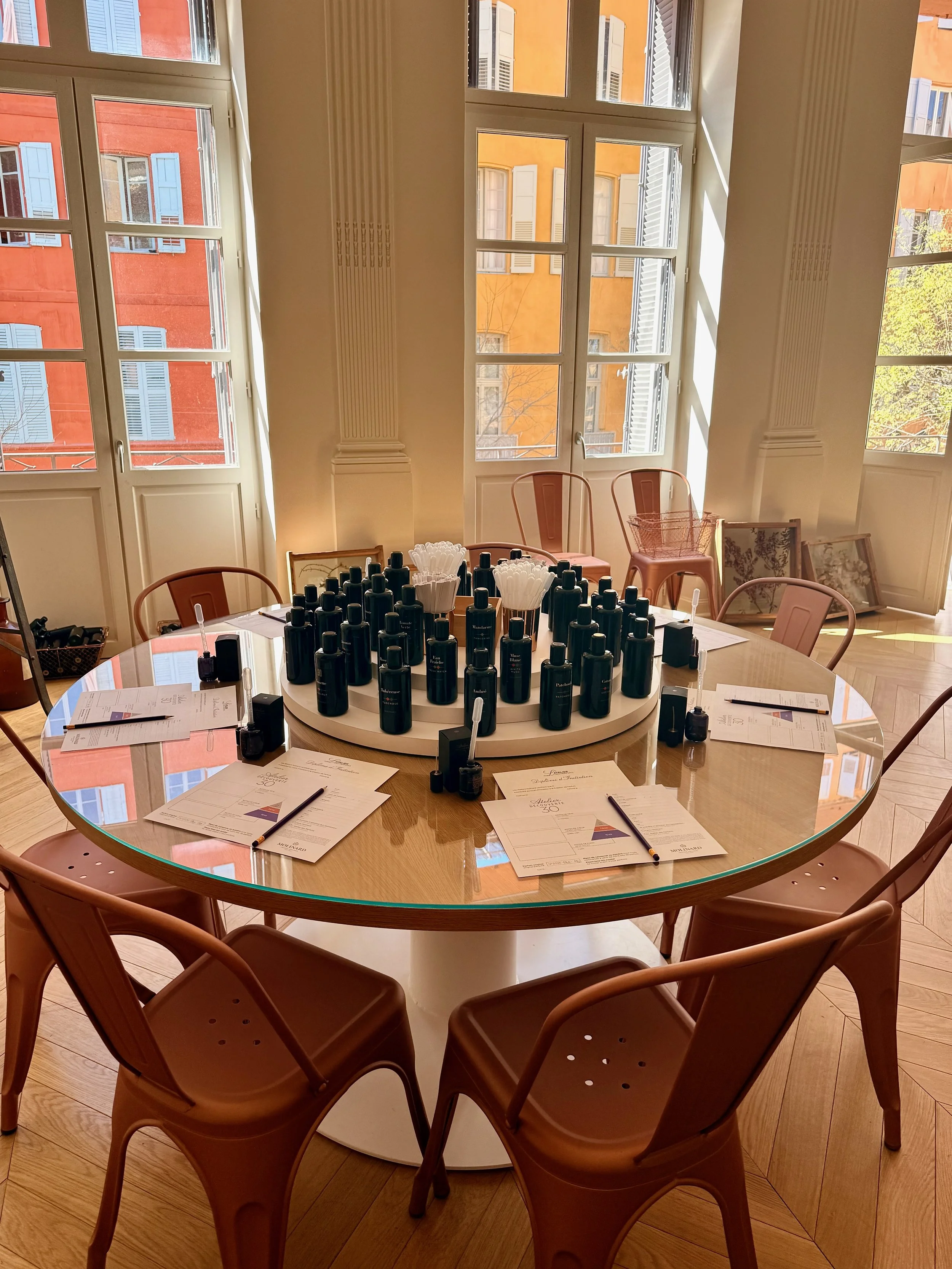
Image: Molinard workshop set up. © 2026 Palates & Miles
If there is one experience in Grasse that defines the visit, it is attending an atelier to make a bespoke perfume. The workshop offered by the Molinard perfume house is an excellent option to explore this experience in full.
The workshop, housed on the second floor of the Molinard Grasse Centre, is a large space with dedicated tables set up for the class. A dedicated Molinard ambassador will lead the workshop by explaining all aspects of the process, from sampling fragrances to the final selection and quantities. The most important part of the experience is the sampling of scents and understanding the base, heart and top notes that will ultimately create the perfect signature fragrance.
One of the most unique features is that you are involved in the mixing of the fragrance itself, by measuring the amounts of each scent into the bottle to take away with you. A record of your creation is retained by Molinard and a reorder of the fragrance can be made later, so that the creation can live on well after the experience has concluded.
Food and drink in Grasse
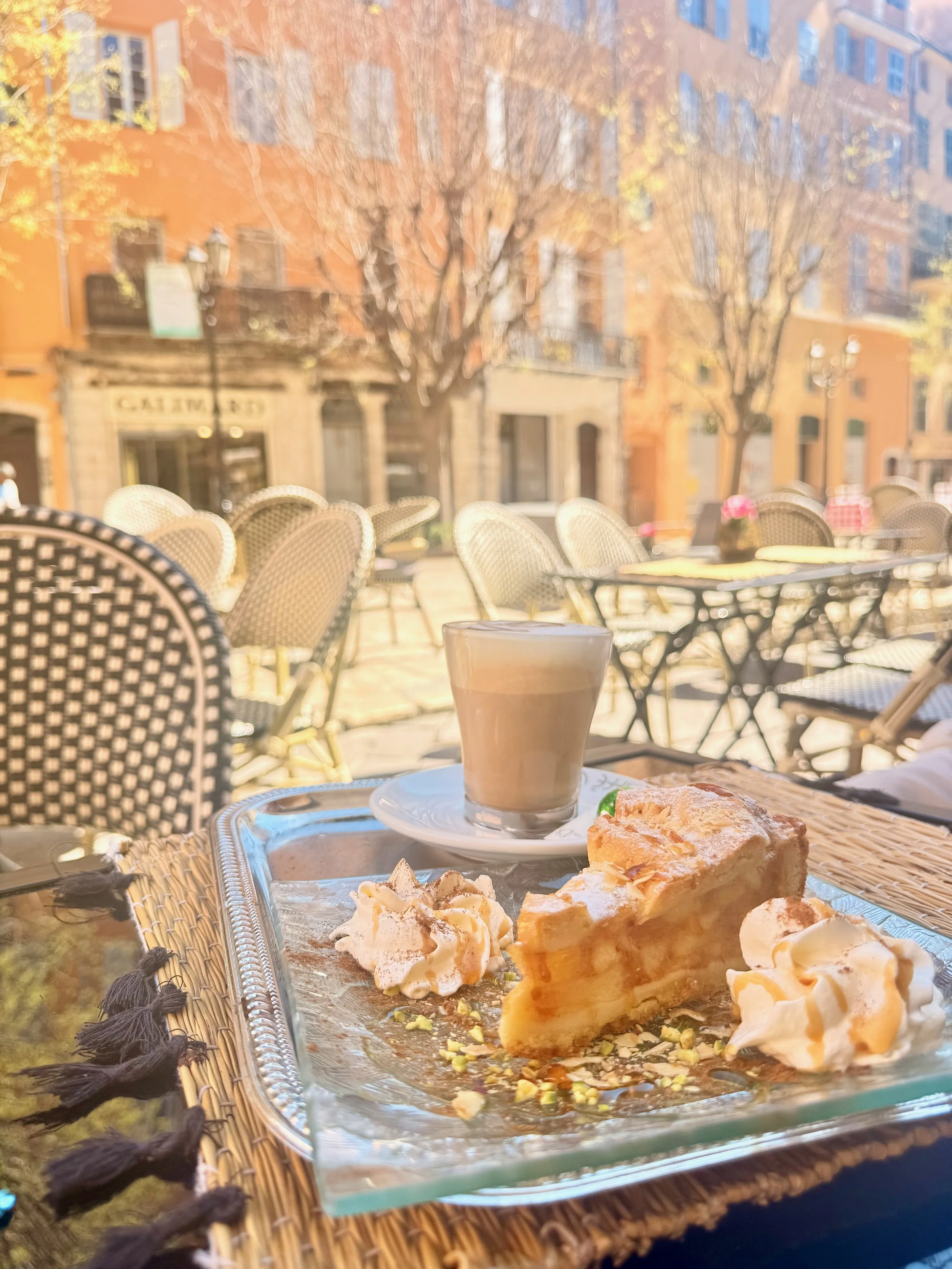
Image: Café in Place aux Aires. © 2026 Palates & Miles
Eating well when in Grasse should complement your day instead of being an anchor around which you build everything else. The best food and drink while visiting can be an unplanned stop at many of the cafés and bistros that line the streets and squares. In particular, Place aux Aires has some excellent choices to stop by, grab coffee and a light bite whilst sitting outdoors and absorbing the atmosphere. There is also a selection of local shops and bakeries selling food that can be consumed on the go. However, for the best experience, a café or bistro is the most considered option.
How to structure the visit
Visiting Grasse is best done over a half-day, as it allows for one experience such as a museum or atelier visit, a quick dining stop and enough time to explore the streets. Due to the small size of the historic centre, you can move easily between each experience and site with ease, and long walks are not required, unless coming or going from the train station. A full day is also feasible, especially if allocating more time for shopping or multiple perfumery stops. Arriving in the earlier part of the morning is advisable to avoid the late afternoon rush of visitors and can also ensure you get to explore the centre in the best light.
Practical notes before you book
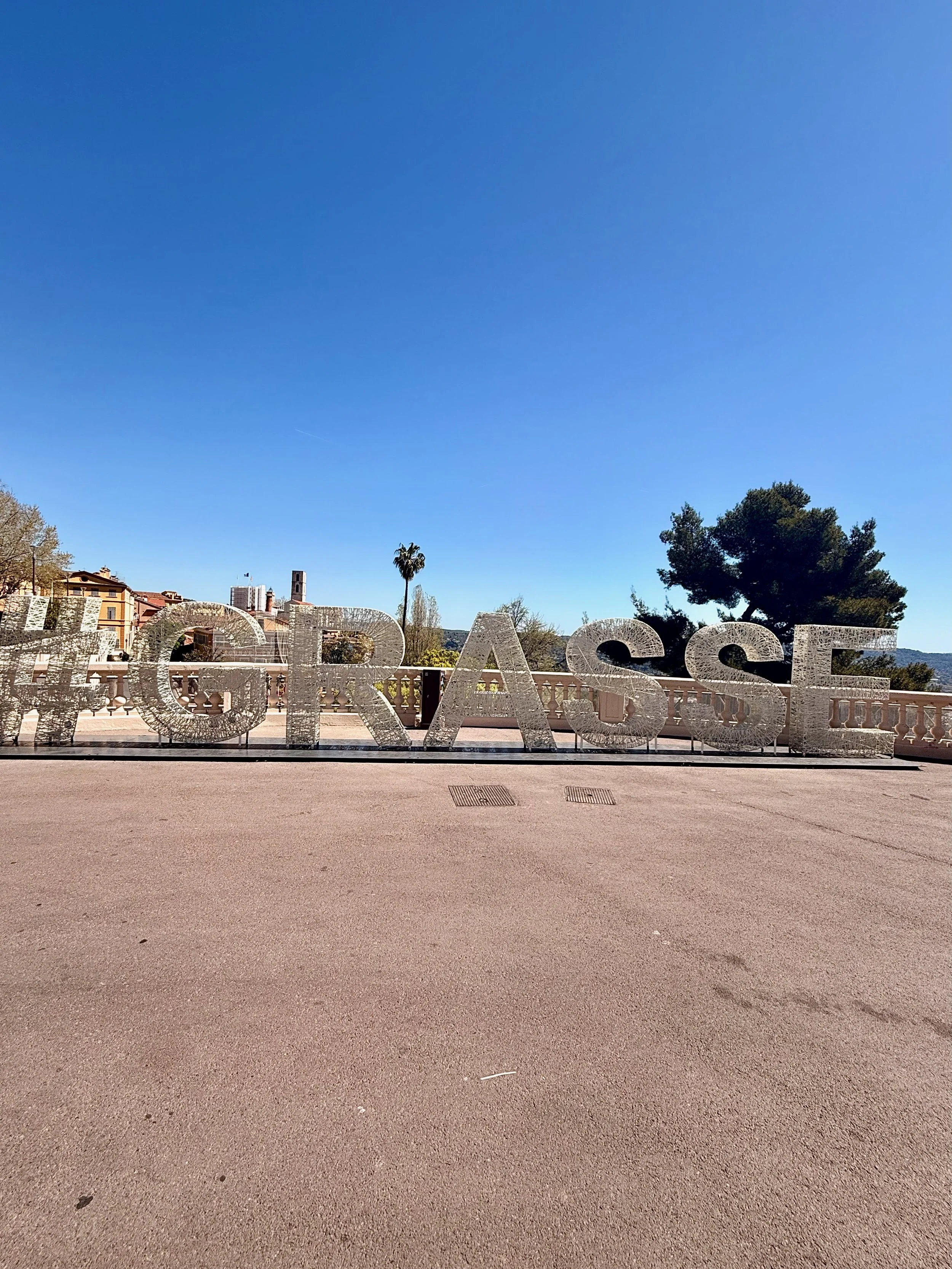
Image: Sign in Place du Cours Honoré-Cresp. © 2026 Palates & Miles.
Before visiting Grasse, plan your experiences in advance and make reservations with ateliers beforehand to avoid disappointment. This is particularly important in the summer when the volume of visitors is higher.
Allow sufficient time in your day for travelling to and from Grasse, as it is located a little away from most Riviera towns and resorts. Trains tend to run on an hourly frequency, so it is important to consider this in advance.
Walking around the historic centre does require multiple hills, steps and uneven paths, so appropriate footwear is recommended for the visit. If it is raining, this may present some challenges, so always check the forecast in advance, especially if visiting off-season. The city is located at a higher altitude than most other parts of the Riviera, so factor in appropriate outerwear in the winter and ensure sun protection in the summer.
P&M tip: If you have time after your visit to Grasse, stop by the nearby hilltop town of Mougins for a full panoramic view of the region. It will not disappoint.
Final thoughts:
Grasse is not a destination that competes with the Riviera, but one that complements it. It offers a more focused experience, where craft and heritage take precedence over pace. The streets, the views and the perfume houses all contribute to a visit that feels considered rather than overwhelming. When approached with a clear plan and the intention to experience at least one atelier, Grasse reveals itself as one of the more distinctive and rewarding stops in the region.
P&M note:
For those shaping a wider Provence or Riviera trip, our edit on London to the South of France, Considered offers a more structured approach to reaching the region.
To receive future Edits, releases and notes from Palates & Miles, you can sign up to our mailing list here.